top of page


Frequently asked questions
GET THE FACTS
What is Initiative 175?
GUARANTEES taxes and fees you pay on your car or gas go to roads.
STOPS road funding from being raided for unrelated projects.
PROTECTS drivers, commuters and communities.
ENSURES existing tax revenue is spent where it should be.
Colorado’s extensive network of roads and highways is the backbone of the state’s economy and daily life. Roughly 80% of communities rely solely on trucks to move goods, and the state’s 90 million tourists a year are heavily reliant upon the roads. Additionally, about 85% of Coloradans use their vehicles to commute to work.
However, the Colorado Department of Transportation (CDOT) reports a shortfall of $350 million per year in funding needed to maintain transportation infrastructure. Nearly 60% of that funding is needed specifically for pavement.
At the same time, Colorado’s per-capita investment in roads has steadily declined, the flat gas tax hasn’t increased since 1991, and inflation costs for infrastructure construction has skyrocketed.
Something must be done.
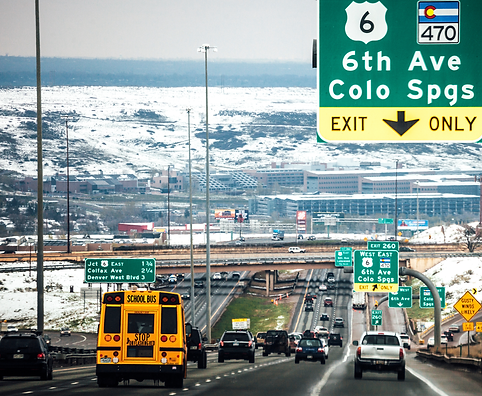
Colorado’s roads are literally falling apart. In 2025, four separate studies have found that Colorado’s roads and highways – in both urban and rural areas – are among the worst in the country.
Colorado is ranked 43rd for transportation infrastructure, with deteriorating roads and bridges costing drivers $11.4 billion – as much as $3,060 per vehicle in some areas – in extra vehicle repairs, lost time, and safety risks each year.
Colorado’s highways rank 45th in urban Interstate pavement condition, 47th in rural Interstate pavement condition, 35th in urban arterial pavement condition, 37th in rural arterial pavement condition, 19th in structurally deficient bridges, 40th in urban fatality rate, and 32nd in rural fatality rate.
Compared to neighboring and nearby states, Colorado’s highway performance is worse than Utah’s (8th), Wyoming’s (12th), Kansas’ (22nd), Arizona’s (29th), Nebraska’s (30th), and New Mexico’s (38th).
Colorado ranks 36th out of the 50 states in traffic congestion, with drivers spending 36 hours a year stuck in traffic.
Colorado’s population grew to nearly six million residents in 2024, a 39% increase since 2000. Similarly, Colorado’s annual vehicle miles traveled (VMT) increased by 31% from 2000 to 2019, and traffic congestion has generally followed at the same pace. Additionally, Colorado’s harsh weather and terrain impose heavy demands on road maintenance.
Chronic underfunding and policy choices that divert transportation money and decades of deferred maintenance have exacerbated the problem.
While Colorado lawmakers have passed transportation packages and scheduled transfers to highways and roads over the years, they have also reduced planned highway funding, transferred money to other uses and left core road needs underfunded even in years with surpluses. The legislature has created new fees and programs and made some one-time and scheduled transfers, yet it has not consistently prioritized highways. For example, last session the legislature cut more than $100 million from the transportation budget.
No. SB-260 was a step in the right direction but the creation of new sources of dedicated funding and state enterprise funds aimed to preserve, improve, and expand existing transportation infrastructure. While some of the money went to roads, more than $200 million in transportation fees a year – including delivery fees generated from retailers like Uber, Grubhub, Amazon and DoorDash – are being shifted away from roads and highways and towards environmental mitigation and mass transit, typically in the Denver and Boulder areas.
Additionally, legislative diversions and budget cuts continued after SB 260’s passage, underscoring the need for dedicated, voter-protected funding that cannot be shifted to other uses.
As it stands now, lawmakers do not have a plan to address road repairs and funding.
CDOT’s current asset management funding isn’t sufficient to maintain the existing condition of the transportation network or to meet long-term goals for performance. By 2050, freight moved by trucks is expected to grow by 63%. Colorado’s motor fuel tax – a critical source of funding – will not keep pace with future transportation needs due to vehicles’ improved fuel efficiency, the increasing use of electric vehicles, and inflation in highway construction costs.
The gap between needs and available resources will continue to widen, and drivers—as well as the broader economy—will suffer the consequences. If voters don’t take matters into their own hands, Colorado will likely remain stuck in a cycle of deferred maintenance, emergency repairs, budget-driven project cuts, and declining road and bridge quality.
Securing reliable, diverse, and sustained funding outside of gas taxes is necessary to meet future needs, maintenance costs, and increased demand.
If Initiative 175 is approved by voters, it would add a new Section 22 to Article X of the Colorado Constitution. The full, official text is available on the Colorado Secretary of State’s website.
bottom of page